Unesco description
In a region that has been subjected to severe glaciation, these parks and reserves, with their steep gorges, covering an area of over 1 million ha, constitute one of the last expanses of temperate rainforest in the world. Remains found in limestone caves attest to the human occupation of the area for more than 20,000 years.
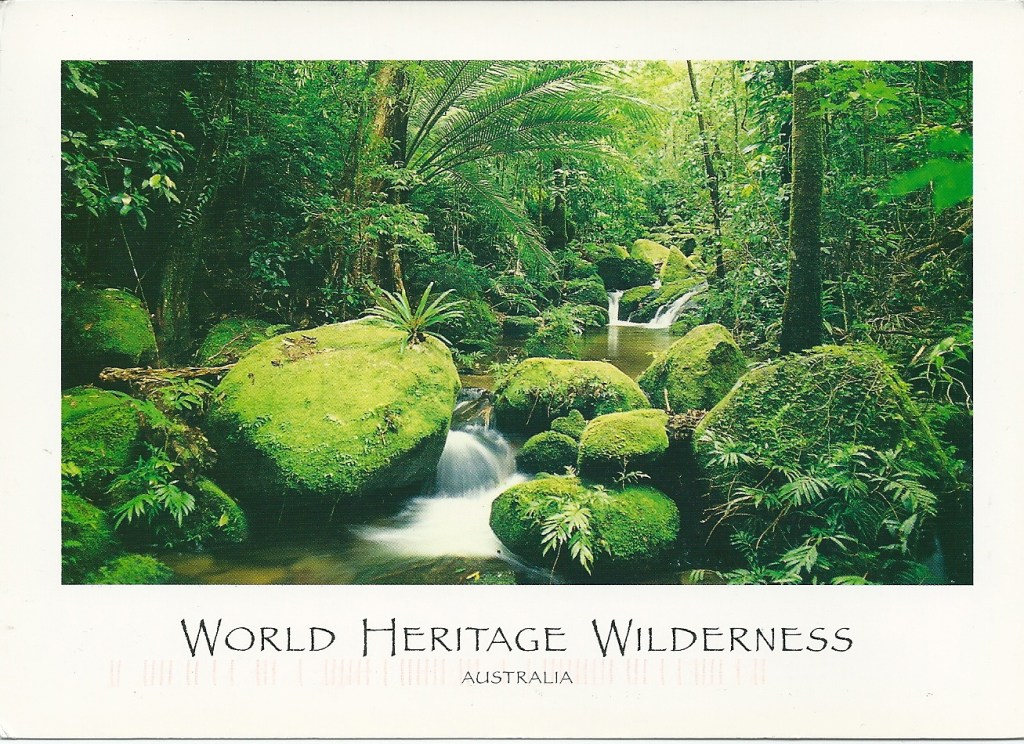
Received through Postcrossing on 28.02.2012
The Tasmanian Wilderness is a network of parks and reserves with steep gorges. Human remains dating back more than 20.000 years have been found in the area.
It is one of the last expanses of temperate rainforests in the world.
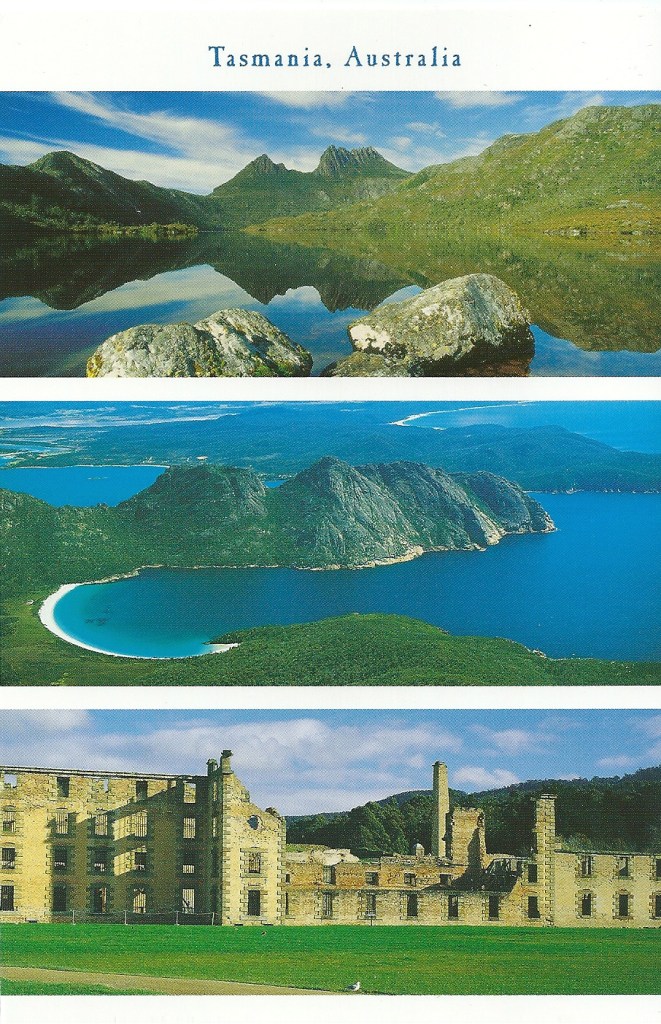
Received through Postcrossing on 06.08.2013
Dove Lake and Cradle Mountain
Dove Lake is a very popular tourist attraction with many walking paths. The lake was formed by glaciation.
Cradle Mountain is the fifth-highest mountain in Tasmania with 1.545 meters above sea level and is named after its resemblance to a gold mining cradle.
Wineglass Bay
Wineglass Bay is voted by many travel authorities as one of the world´s 10 best beaches today due to its white sands and clear water. In the 1820s it was a favoured spot for whalers who butchered their prey on the beach, turning the water red. This, in combination with the shape of the beach, may have lead to the naming of it.
The Penitentiary, Port Arthur
The penitentiary of Port Arthur is part of another WHS, the Australian Convict Sites, of which you can read more below.
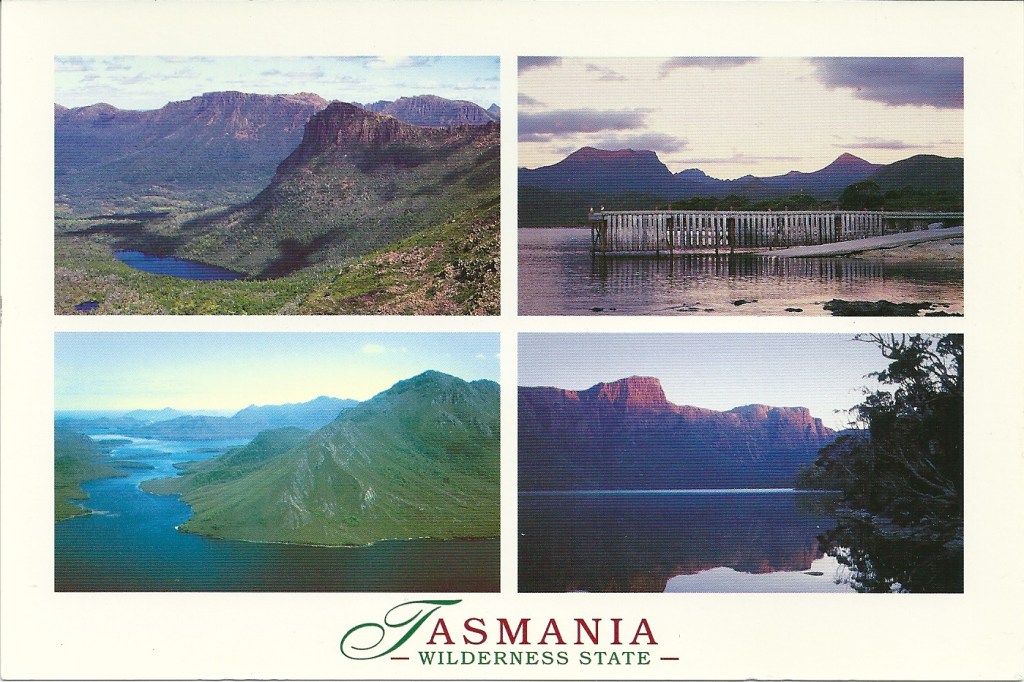
Received through Postcrossing on 02.10.2014
This card shows the view from the top of Mt. Ossa in the heart of the Tasmanian Wilderness, the Mount Anne Massif at sunset from the shores of lake Pedder, the coastline at Port Davey and the Eliza Plateau and lake Judd at sunrise.
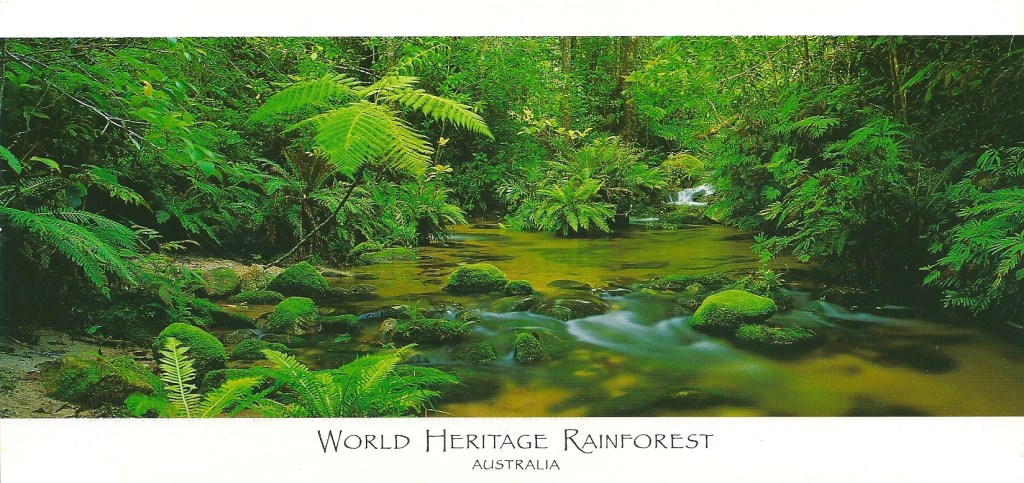
Received through Postcrossing on 04.03.2011
The region is known for its diversity of flora and some of the longest lived trees and tallest flowering plants in the world grow in this area. It is a stronghold for several animals that are either extinct or threatened on the mainland of Australia.
 Unesco Postcards