Unesco description
No doubt thousands of statues still remain to be unearthed at this archaeological site, which was not discovered until 1974. Qin (d. 210 B.C.), the first unifier of China, is buried, surrounded by the famous terracotta warriors, at the centre of a complex designed to mirror the urban plan of the capital, Xianyan. The small figures are all different; with their horses, chariots and weapons, they are masterpieces of realism and also of great historical interest.
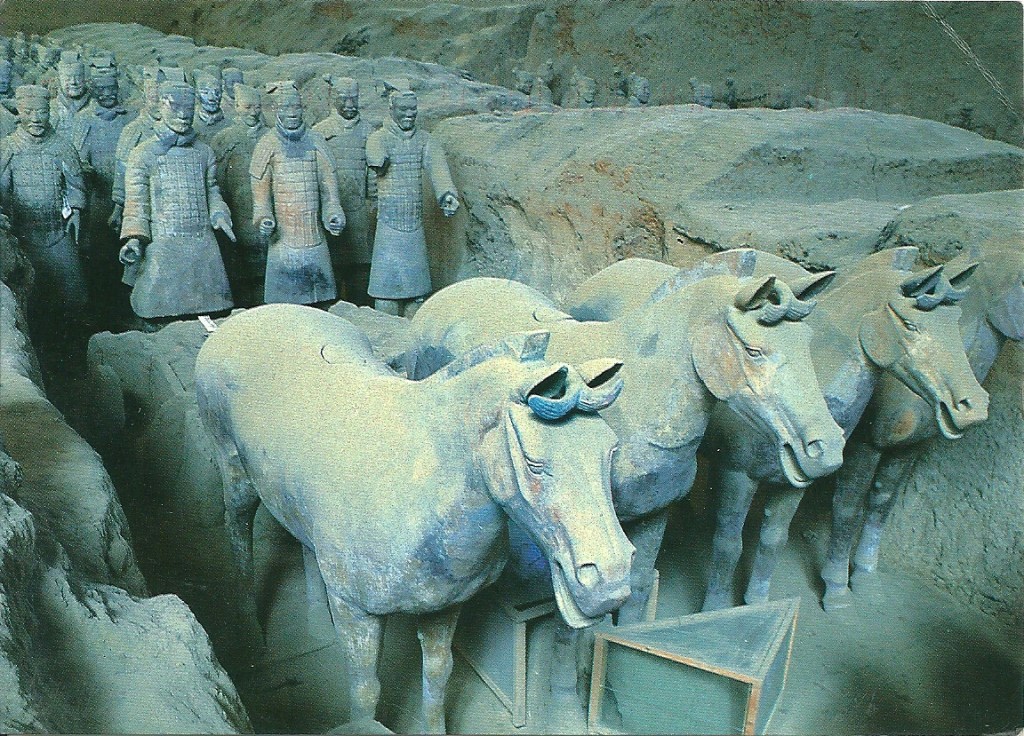
Received through Postcrossing on 04.11.2011
The most well-known part of this mausoleum is the ¨Terracotta Army¨. The mausoleum is located near Xi´an in China. It was constructed over 38 years from 246 to 208 BC and is situated underneath a 76 meter tall mound. Work on the mausoleum started soon after Emperor Qin ascended the thone in 246 when he was 13 years old. The layout of the mausoleum is modeled on the Qin capital Xianyang and is divided into inner and outer cities.
The tomb itself has not been excavated yet. Archaeological explorations currently concentrate on several other sites, like the Terracotta Army.
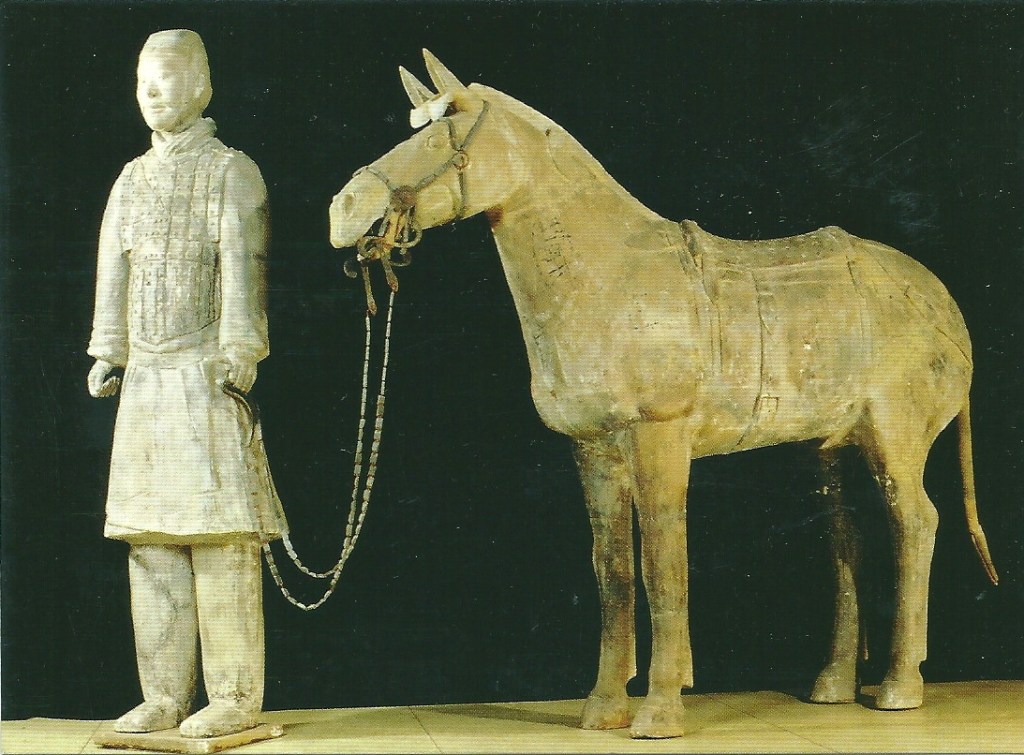
Received through Postcrossing on 27.02.2011
This is a collection of terracotta sculptures depicting the armies of Emperor Qin Shi Huang and its purpose was to protect the Emperor in the afterlife. The figures were discovered in 1974 by local farmers. They vary in height according to their roles, with the generals being the tallest. Current estimations are that there are over 8000 soldiers, 130 chariots with 520 horses and 150 cavalry horses. Non military figures were also found and they include officials, acrobats, strongmen and musicians
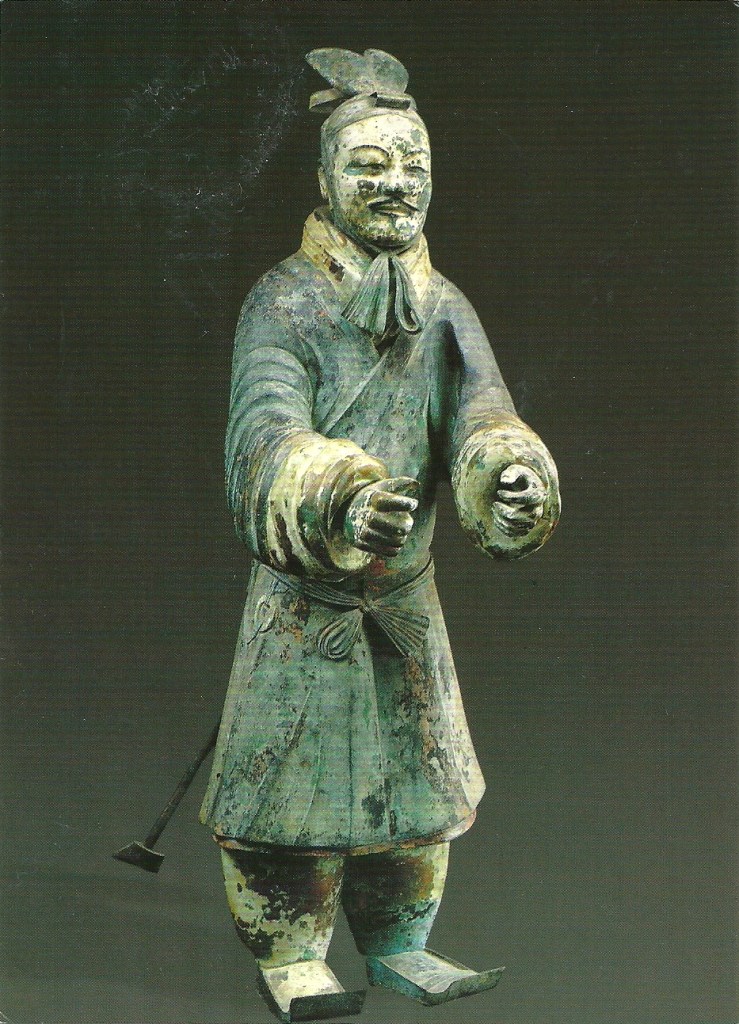
Received through Postcrossing on 23.01.2014
The terracotta figures are life sized, they vary in height, uniforms and hairstyles. Most originally held real weapons. They were also originally painted in various colors and lacquered.
 Unesco Postcards