Unesco description
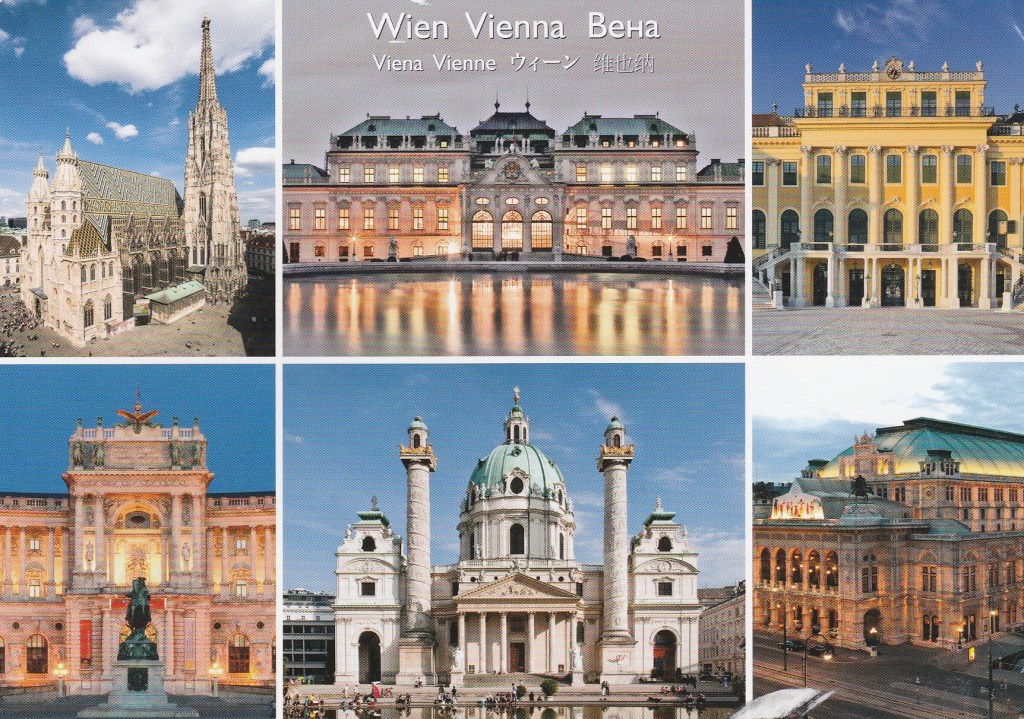
Vienna developed from early Celtic and Roman settlements into a Medieval and Baroque city, the capital of the Austro-Hungarian Empire. It played an essential role as a leading European music centre, from the great age of Viennese Classicism through the early part of the 20th century. The historic centre of Vienna is rich in architectural ensembles, including Baroque castles and gardens, as well as the late-19th-century Ringstrasse lined with grand buildings, monuments and parks.
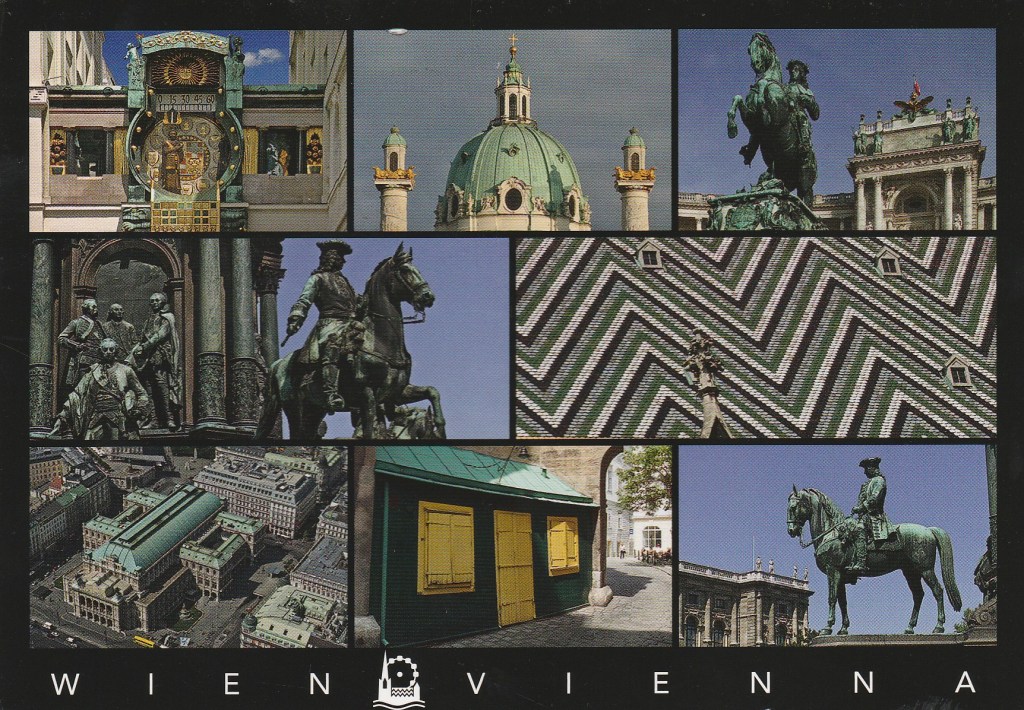
Received from Rudy and Ruth on 28.08.2017
Vienna developed from early Celtic and Roman settlements into a Medieval and Baroque city, the capital of the Austro-Hungarian Empire. It played an essential role as a leading European music centre, from the great age of Viennese Classicism through the early part of the 20th century. The historic centre of Vienna is rich in architectural ensembles, including Baroque castles and gardens, as well as the late-19th-century Ringstrasse lined with grand buildings, monuments and parks.
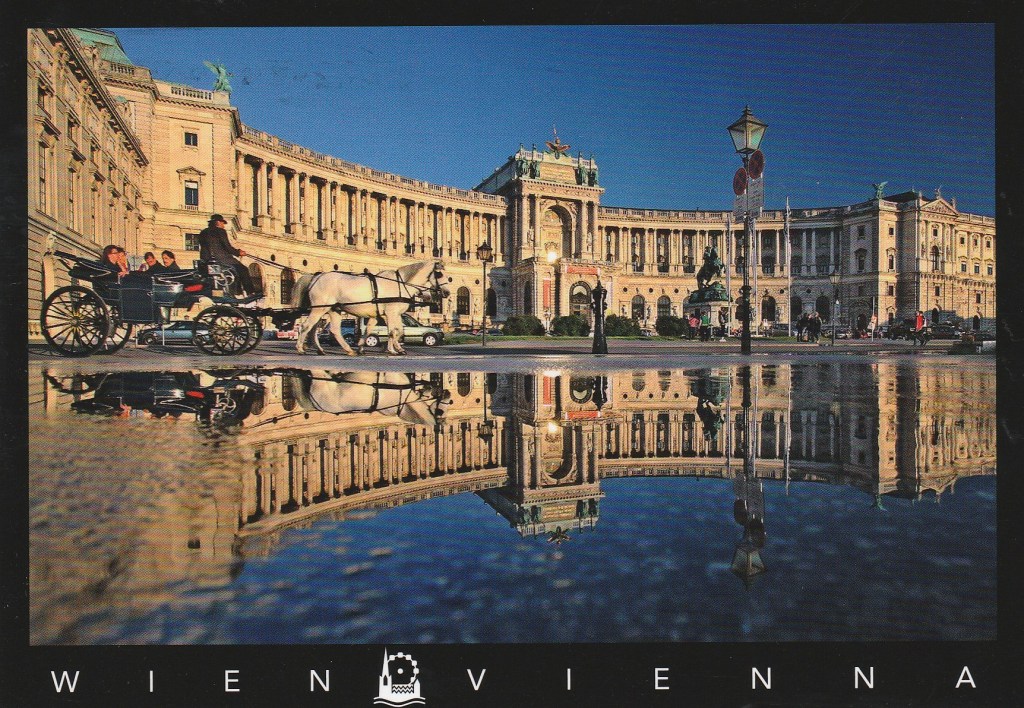
Received from Rudy and Ruth on 28.08.2017
The Hofburg was the seat of power of the Habsburg dynasty and today is the residence and workplace of the President of Austria.
On the card you see the Heldenplatz (Heroe´s Square) where many important actions took place, including Adolf Hitler´s announcement of the Austrian annexation to Nazi Germany.
Received from Rudy and Ruth on 28.08.2017
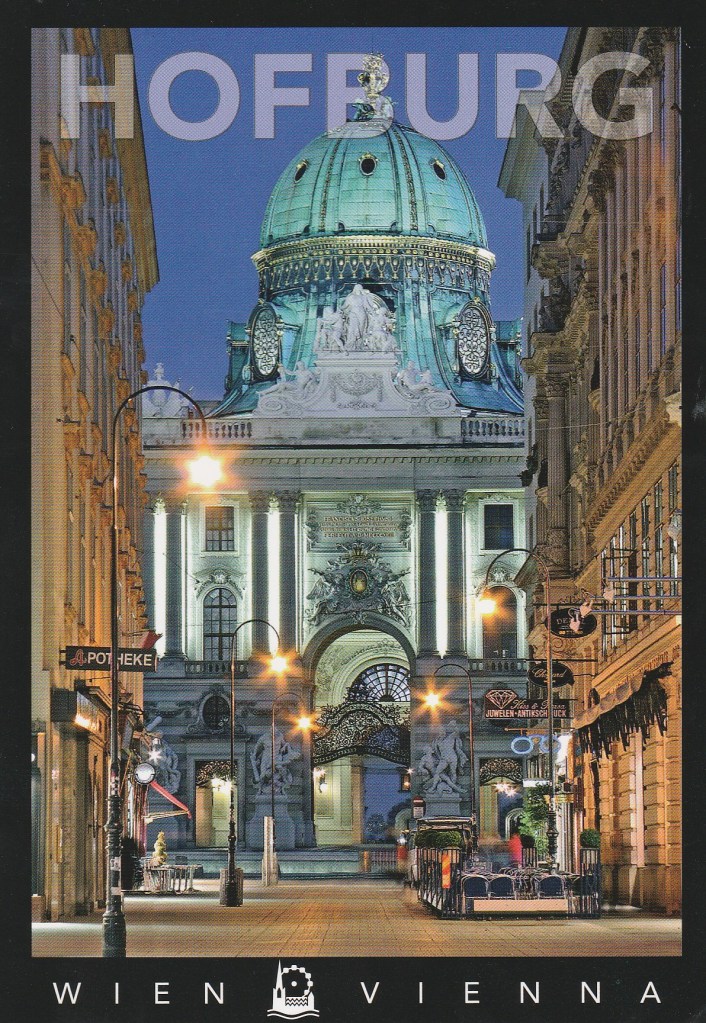
Hofburg (former imperial palace)
This view shows Saint Michael´s wing
Received from Rudy and Ruth on 28.08.2017
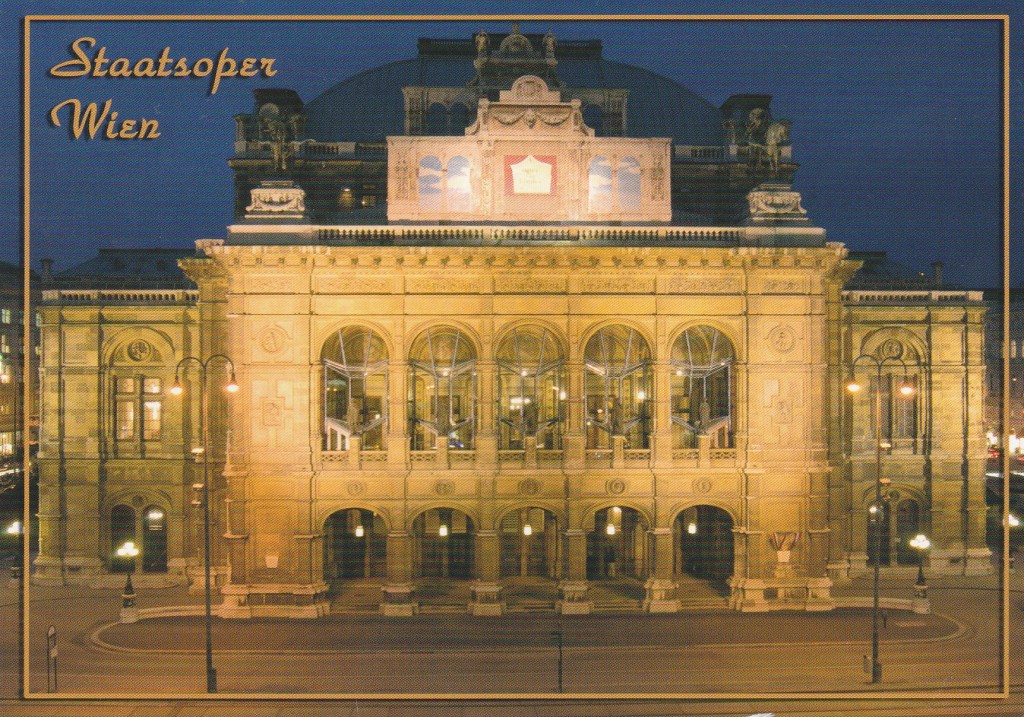
Staatsoper (The Opera House)
This is one of the busiest opera houses in the world, with 50 to 60 operas per year. It was built in 1869.
Received from Rudy and Ruth on 28.08.2017
 Unesco Postcards