Unesco description
Salzburg has managed to preserve an extraordinarily rich urban fabric, developed over the period from the Middle Ages to the 19th century when it was a city-state ruled by a prince-archbishop. Its Flamboyant Gothic art attracted many craftsmen and artists before the city became even better known through the work of the Italian architects Vincenzo Scamozzi and Santini Solari, to whom the centre of Salzburg owes much of its Baroque appearance. This meeting-point of northern and southern Europe perhaps sparked the genius of Salzburg’s most famous son, Wolfgang Amadeus Mozart, whose name has been associated with the city ever since.
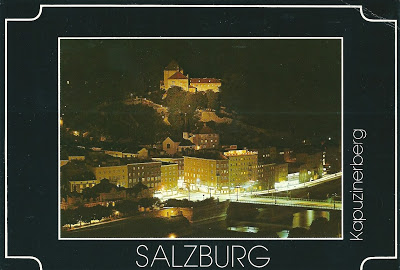
Received through a private swap on 20.11.2013
On this card you can see the Kapuzinerberg, home to a Capucines cloister. On the way to the cloister there are several oratories and a memorial place for Wolfgang Amadeus Mozart
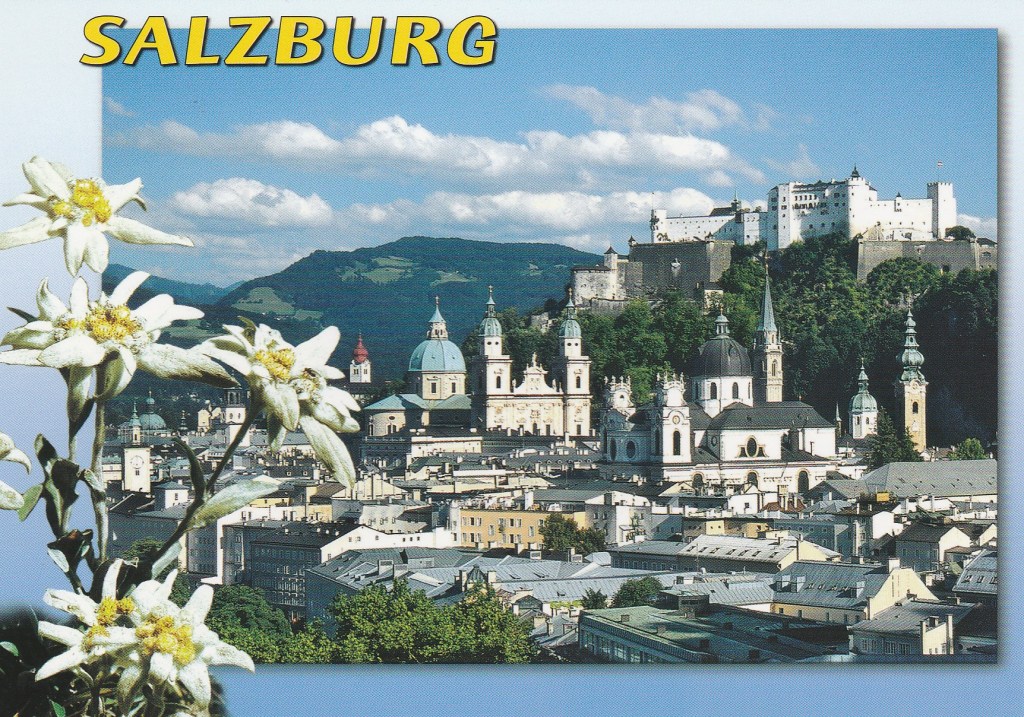
Received from Rudy and Ruth on 28.08.2017
On this card you see the old town of Salzburg and part of the cathedral. The first church was built there in 774 by Saint Rupert, to whom the actual cathedral is dedicated. It contains the font in which Wolfgang Amadeus Mozart was buried
 Unesco Postcards