Unesco description
The Béguines were women who dedicated their lives to God without retiring from the world. In the 13th century they founded the béguinages , enclosed communities designed to meet their spiritual and material needs. The Flemish béguinages are architectural ensembles composed of houses, churches, ancillary buildings and green spaces, with a layout of either urban or rural origin and built in styles specific to the Flemish cultural region. They are a fascinating reminder of the tradition of the Béguines that developed in north-western Europe in the Middle Ages.
Partial list
- Béguinage de Hoogstraten
- Béguinage de Lier (Lierre)
- Grand Béguinage de Mechelen (Malines)
- Béguinage de Turnhout
- Beguinage de Sint-Truiden (Saint Trond)
- Béguinage de Tongeren (Tongres)
- Béguinage de Dendermonde (Termonde)
- Petit Béguinage de Gent (Gand)
- Béguinage de Sint-Amandsberg / Gent (Mont-Saint-Amand-lez-Gand)
- Béguinage de Diest
- Grand Béguinage of Leuven (Louvain)
- Béguinage de Bruges (Brugge)
- Béguinage de Kortrijk (Courtrail)
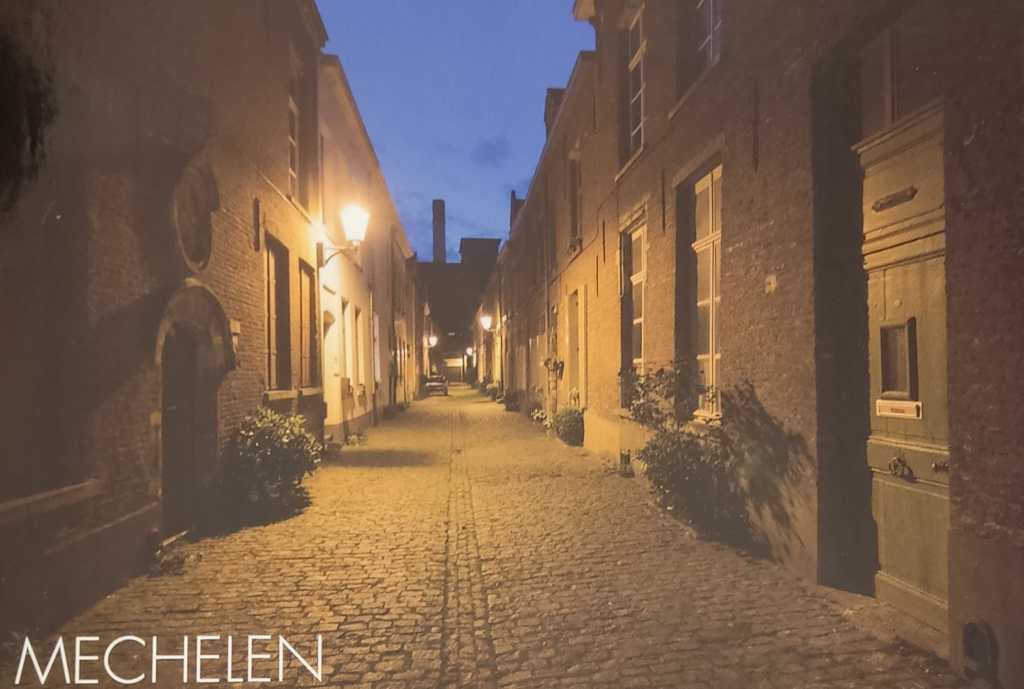
Received through Postcrossing on 14.09.2021
The Groot Begijnhof or Grand Béguinage of Mechelen (Malines) was founded in the 13th century. At it´s best moment, around 1550 there were about 1500 women living there.
 Unesco Postcards