Unesco description
The steep hillsides of the Dazu area contain an exceptional series of rock carvings dating from the 9th to the 13th century. They are remarkable for their aesthetic quality, their rich diversity of subject matter, both secular and religious, and the light that they shed on everyday life in China during this period. They provide outstanding evidence of the harmonious synthesis of Buddhism, Taoism and Confucianism.
Partial list
- Beishan Cliffside Carvings
- Baodingshan Cliffside Carvings
- Nanshan Cliffside Carvings
- Shizhuanshan Cliffside Carvings
- Shimenshan Cliffside Carvings
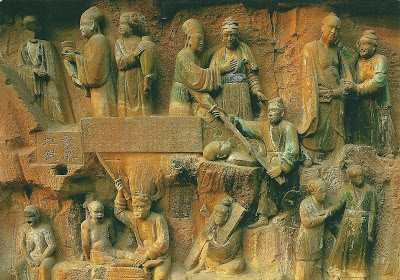
Received through a private swap on 29.11.2013
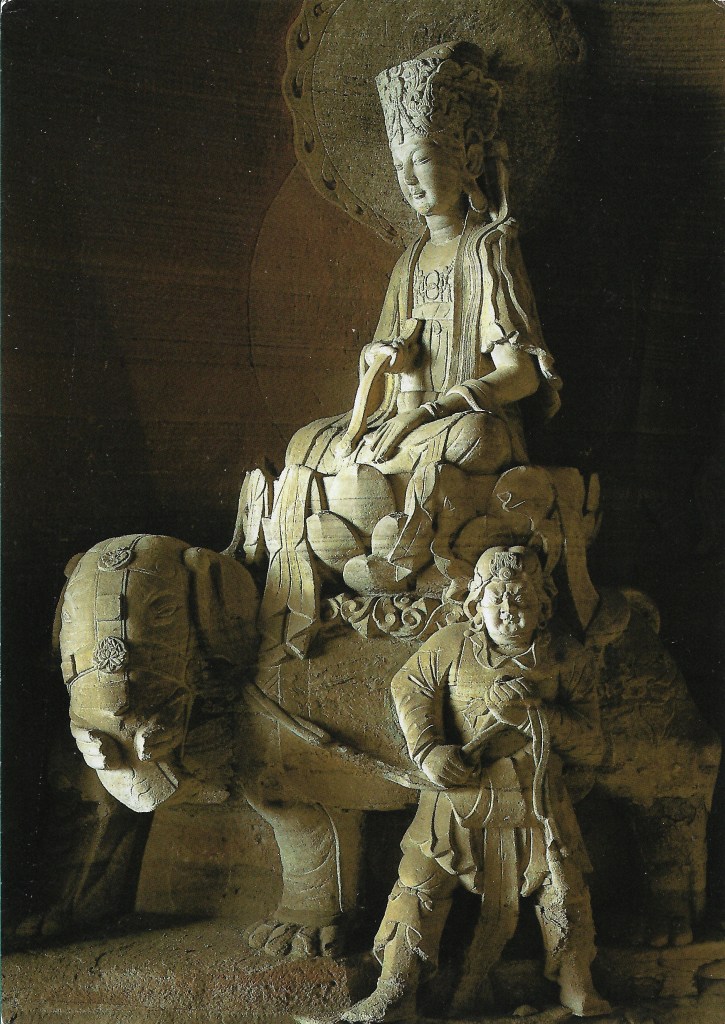
Received through Postcrossing on 18.04.2018
The earliest carvings were begun in 650 AD during the early Tang Dynasty, but the main period of their creation began in the late 9th century, when Wei Junjing, Prefect of Changzhou, pioneered the carvings on Mount Beishan, and his example was followed after the collapse of the Tang Dynasty by local and gentry, monks and nuns, and ordinary people during the Five Dynasties and Ten Kingdoms period (907-65). In the 12th century, during the Song Dynasty, a Buddhist monk named Zhao Zhifeng began work on the elaborate sculptures and carvings on Mount Baoding, dedicating 70 years of his life to the project.
 Unesco Postcards