Unesco description
The City of Graz – Historic Centre and Schloss Eggenberg bear witness to an exemplary model of the living heritage of a central European urban complex influenced by the secular presence of the Habsburgs and the cultural and artistic role played by the main aristocratic families. They are a harmonious blend of the architectural styles and artistic movements that have succeeded each other from the Middle Ages until the 18th century, from the many neighbouring regions of Central and Mediterranean Europe. They embody a diversified and highly comprehensive ensemble of architectural, decorative and landscape examples of these interchanges of influence.
Received from Stefan on 12.07.2014
Graz is the second largest city of Austria, after Vienna, and has a long tradition as a student city.
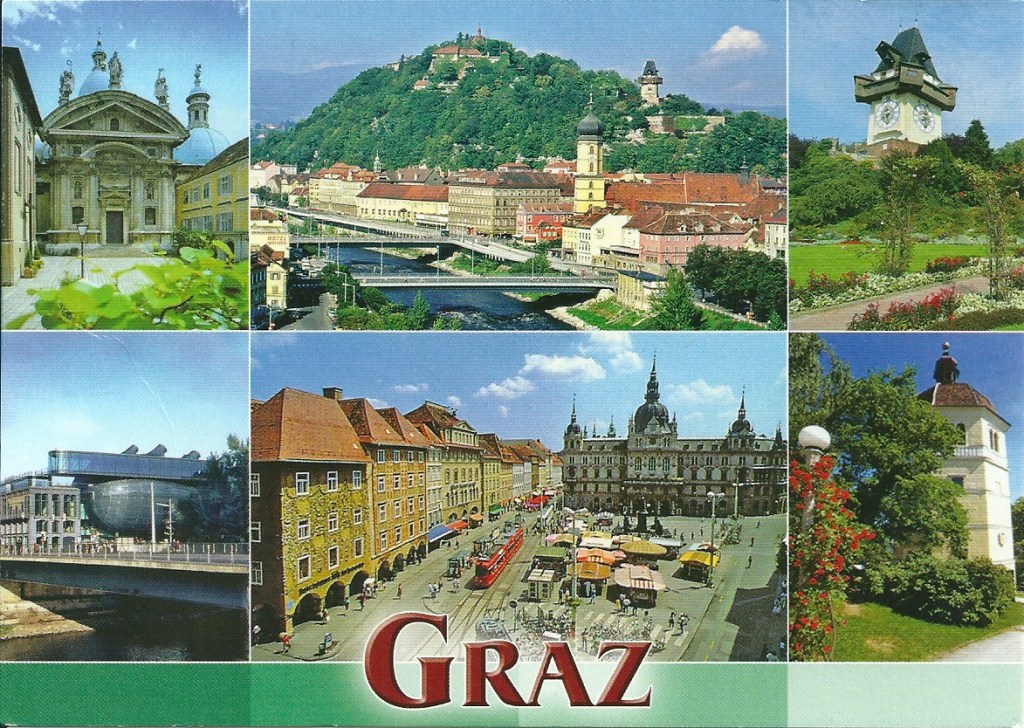
On this card you can see different view, the mausoleum, Schlossberg, Clocktower, Kunsthaus (Museum of Modern Art), Main Square with the Rathaus (Town Hall) and the Belltower.
The Schlossberg has a fortress on it that goes back to the 10th century. The castle was never conquered, but it was severely damaged by Napoleon´s forces. The Clocktower and Belltower were saved after the people of Graz paid a ransom for their preservation.
The Mausoleum is the last resting place of Emperor Ferdinand II and the most important example of mannerism in Graz.
Received from Postcrossing Forum on 01.03.2011
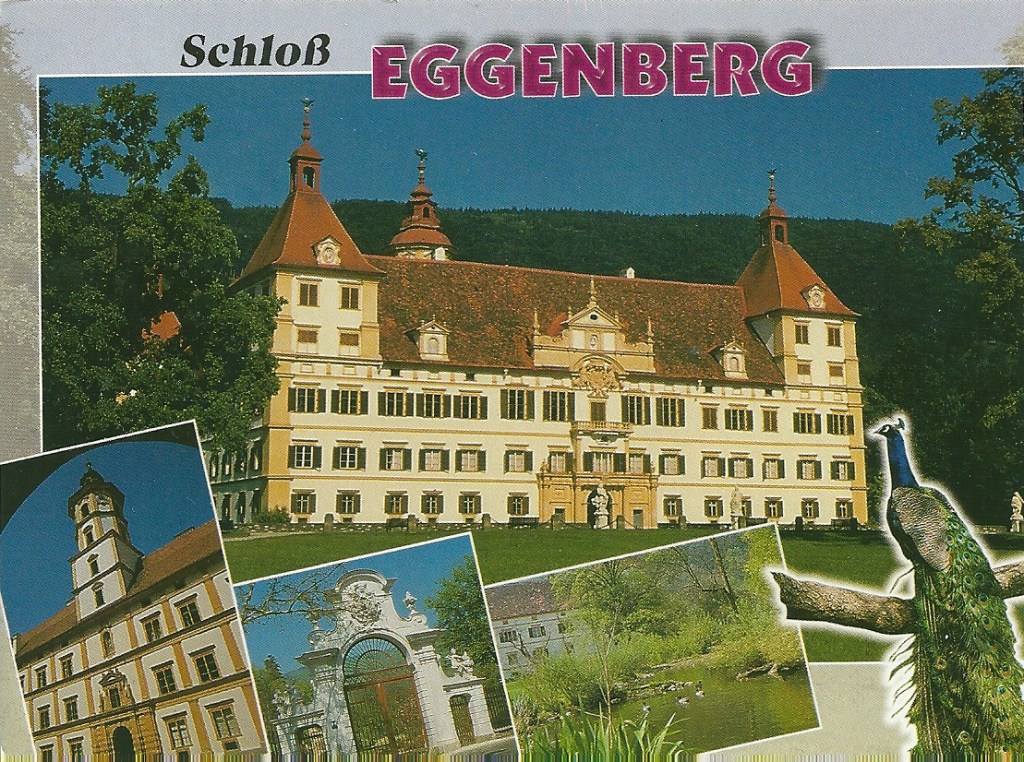
Eggenberg Palace is the most significant Baroque palace in Styria. At first glance it presents itself as a uniform, new construction of the 17th century, but large portions actually date back to the late Middle Ages.
In 1460, Balthasar Eggenberger bought the property on which the noble residence became fixed.

Received through a private swap on 01.01.2022
 Unesco Postcards