Unesco description
The property includes a selection of eleven penal sites, among the thousands established by the British Empire on Australian soil in the 18th and 19th centuries. The sites are spread across Australia, from Fremantle in Western Australia to Kingston and Arthur’s Vale on Norfolk Island in the east; and from areas around Sydney in New South Wales in the north, to sites located in Tasmania in the south. Around 166,000 men, women and children were sent to Australia over 80 years between 1787 and 1868, condemned by British justice to transportation to the convict colonies. Each of the sites had a specific purpose, in terms both of punitive imprisonment and of rehabilitation through forced labour to help build the colony. The Australian Convict Sites presents the best surviving examples of large-scale convict transportation and the colonial expansion of European powers through the presence and labour of convicts.
Partial list
- Kingston and Arthur`s Vale Historic Area (“KAVHA”)
- Old Government House and Domain (“Old Government House”)
- Hyde Park Barracks
- Brickendon and Woolmers Estates (“Brickendon- Woolmers”)
- Darlington Probation Station (“Darlington”)
- Old Great North Road
- Cascades Female Factory (“Cascades”)
- Port Arthur Historic Site (“Port Arthur”)
- Coal Mines Historic Site (“Coal Mines”)
- Cockatoo Island Convict Site (“Cockatoo Island”)
- Fremantle Prison
Received through a private swap on 21.01.2014
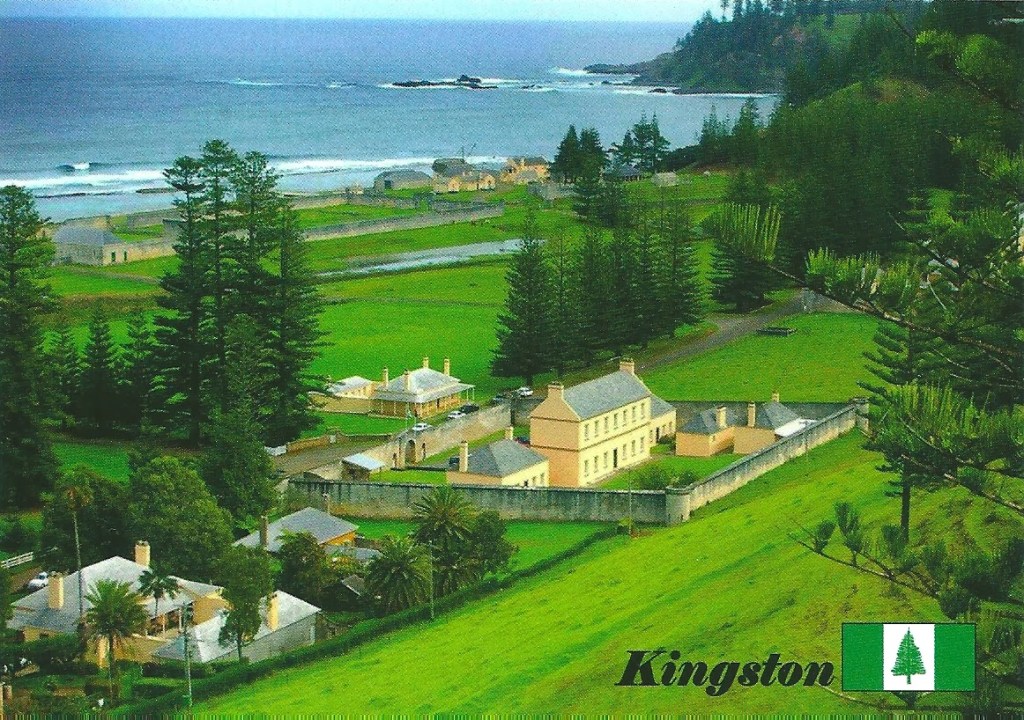
Kingston is the capital of Norfolk island. The town was founded in 1788 by 22 settlers, including 9 male and 6 female convicts. The Unesco part is an old settlement on the Kingston coastal plains (bounded by hills), southern side of Norfolk Island, consisting of a large group of buildings from the British Empire’s convict era (1788–1855).
Andrea writes: ¨I had the pleasure of visiting Norfolk Island in 2008, stunning spot of the world. This card shows the convict settlement at Kingston, the ruin in the background is the goal (jail), complete with underground cells (you can´t go in). The building nearest surrounded by walls is one of the many museums / churches on the island. The local administration uses some of these buildings as offices. Population is around 1200 people with up to 800 tourists at anytime on the island. And yes, it really is this green!¨
Received through a private swap on 21.01.2014
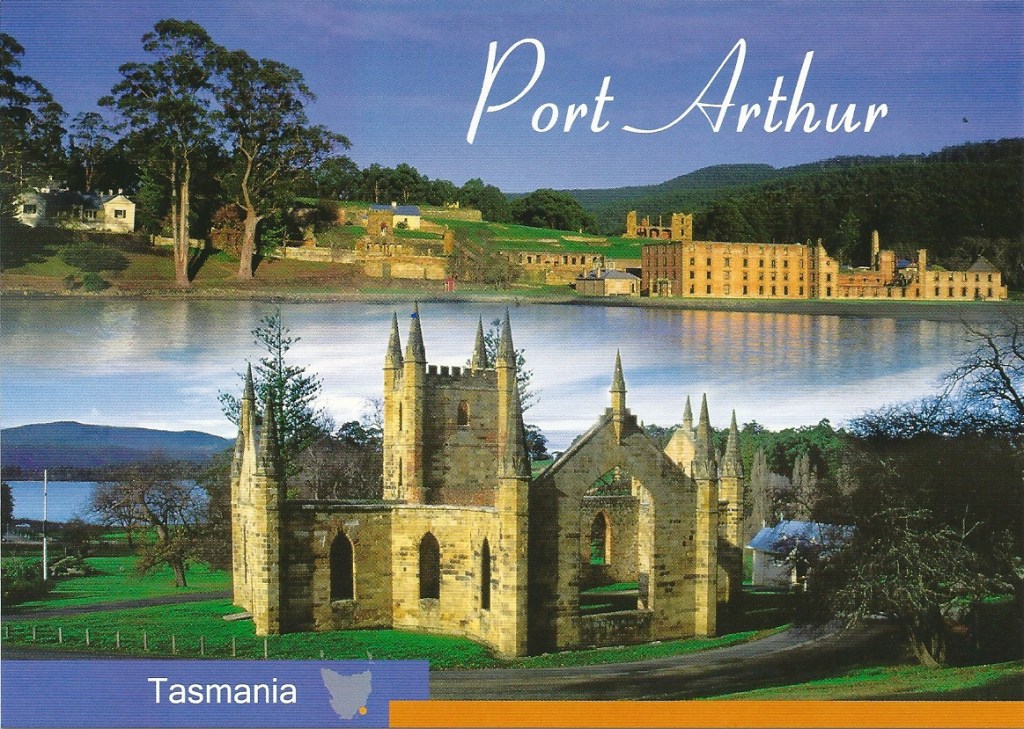
Port Arthur was named after George Arthur, the Lieutenant Governor of Van Diemen’s Land. The settlement started as a timber station in 1830, but it is best known for being a penal colony.
From 1833, until 1853, it was the destination for the hardest of convicted British criminals, those who were secondary offenders having re-offended after their arrival in Australia. Rebellious personalities from other convict stations were also sent here, a quite undesirable punishment. In addition Port Arthur had some of the strictest security measures of the British penal system.
Received through a private swap on 08.05.2010
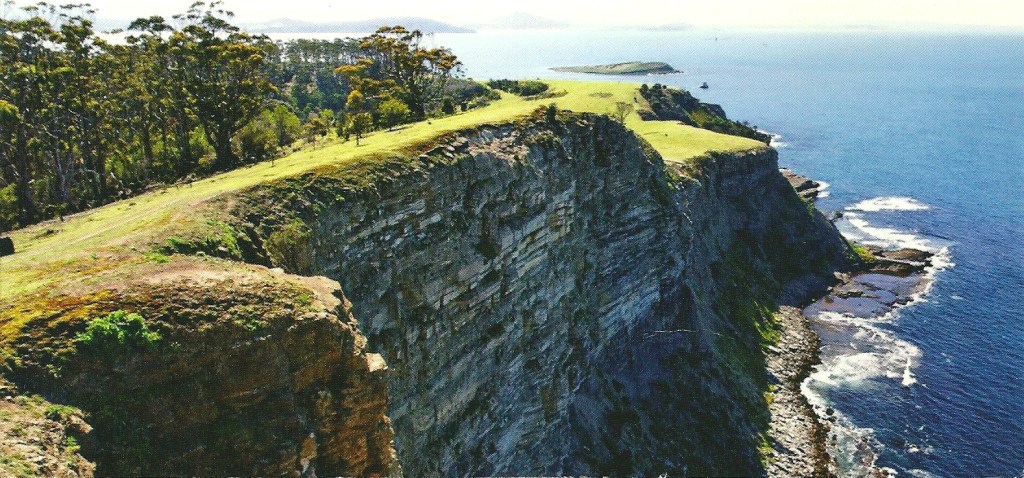
The entire island of Maria Island is a national park. For two periods during the first half of the 19th century, Maria Island hosted convict settlements; the first era between 1825 and 1832 and the second era between 1842 and 1851. Three structures from the first convict era remain in the Darlington area: the Commissariat Store built in 1825 and presently used as the park’s reception and visitor centre; the convict penitentiary, completed in 1828 and now used to accommodate visitors rather than detain them; and the convict-built dam on Bernacchis Creek, which still provides Darlington’s water.
Received through Postcrossing on 30.10.2013
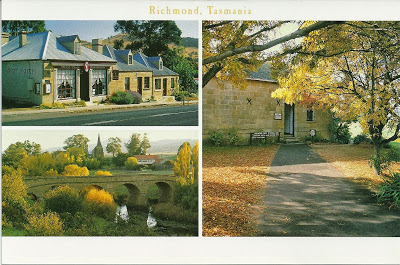
The Richmond Gaol is a convict era building and tourist attraction in Richmond, Tasmania, and is the oldest intact gaol in Australia. Building of the gaol commenced in 1825, and predates the establishment of the penal colony at Port Arthur in 1833. One of the tasks completed by the convicts who were held at Richmond Gaol was the construction of Richmond Bridge.
Most of the gaol buildings have not been changed since convict times. They include an example of a female solitary confinement cell, measuring 2 by 1 metres.
The buildings include a chain gang sleeping rooms, a flogging yard, a cook house and holding rooms. The buildings also feature historical relics and documents.
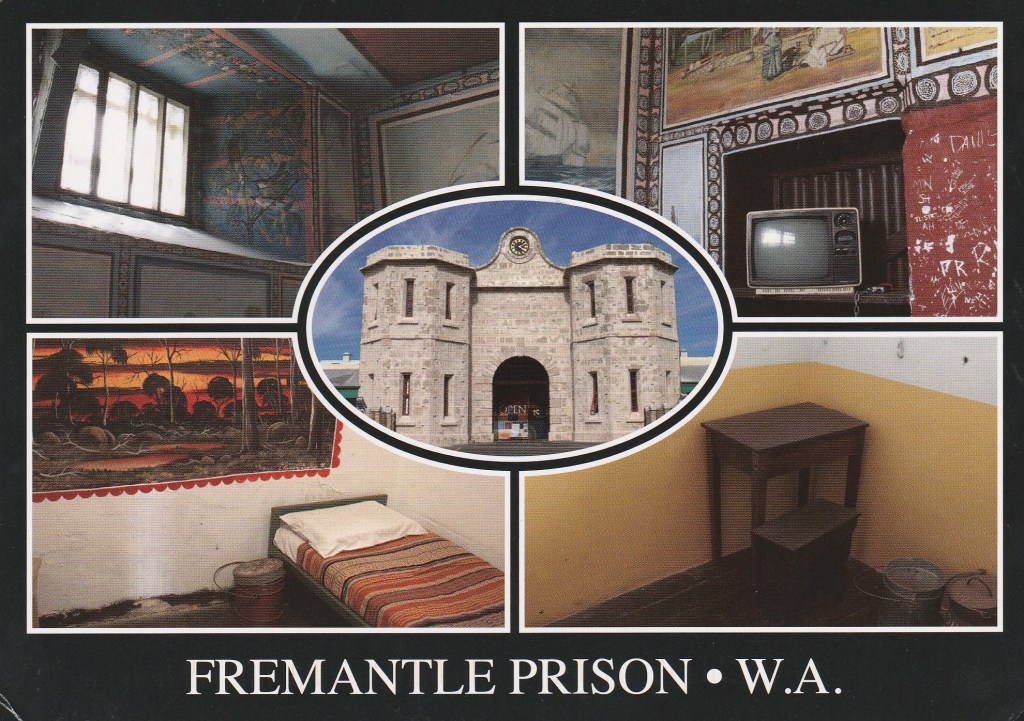
Received through a private swap on 12.07.2017
Fremantle Prison was built between 1851 and 1859 and was operational until 1991. This is the largest such structure in Australia and the most intact one. During the months prior to its closure as a prison, the prisoners were allowed to paint their cells.
 Unesco Postcards