Unesco description
Situated on a rocky peninsula on the Black Sea, the more than 3,000-year-old site of Nessebar was originally a Thracian settlement (Menebria). At the beginning of the 6th century BC, the city became a Greek colony. The city’s remains, which date mostly from the Hellenistic period, include the acropolis, a temple of Apollo, an agora and a wall from the Thracian fortifications. Among other monuments, the Stara Mitropolia Basilica and the fortress date from the Middle Ages, when this was one of the most important Byzantine towns on the west coast of the Black Sea. Wooden houses built in the 19th century are typical of the Black Sea architecture of the period.
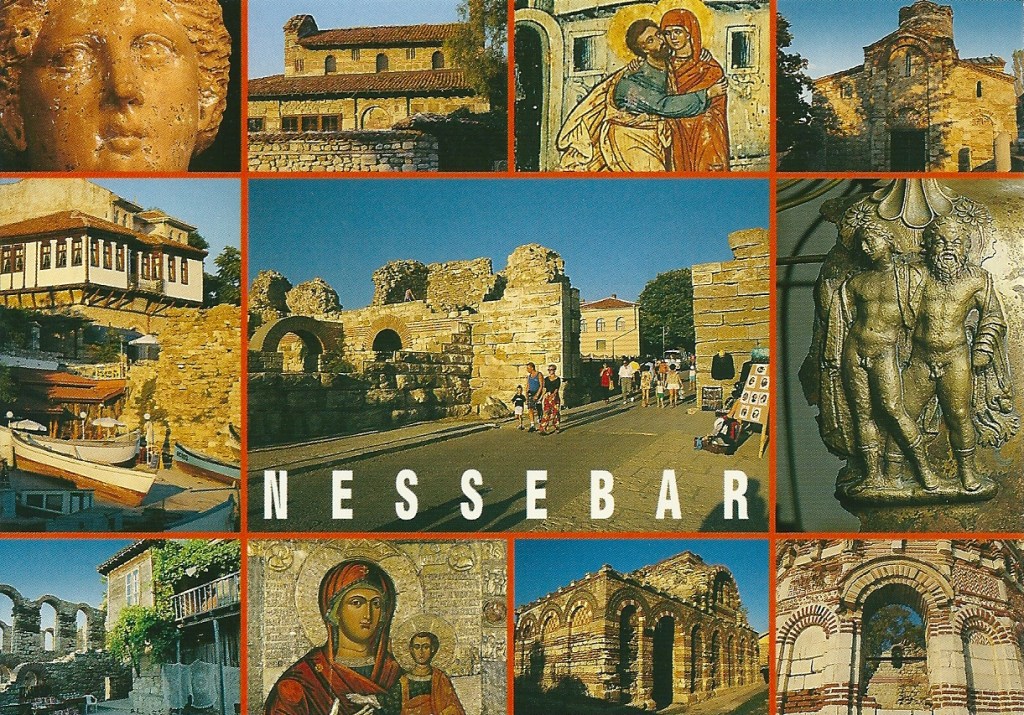
Received through a private swap on 26.02.2010
Middle and then clockwise starting from the top left corner:
The House of Captain Pavel (19th century)
The old town´s gateway with part of the fortress walls
Head of a statue of Arisnoe III (3rd century BC)
New Metropolitan Church of St. Stephen (11th century)
The Holy Virgin (16th century)
The Church of St. John Baptist (11th century)
Bronze statue of Dionysus and Cyllenius (4th century BC)
The Church of St. John Aliturgetos (13th century)
The Church of the Archangels Michael and Gabriel (14th century)
The Virgin Eleusa (1342)
View from the Old Town
 Unesco Postcards