Unesco description
Built between the 11th and 18th centuries, the Old Town, the Lesser Town and the New Town speak of the great architectural and cultural influence enjoyed by this city since the Middle Ages. The many magnificent monuments, such as Hradcany Castle, St Vitus Cathedral, Charles Bridge and numerous churches and palaces, built mostly in the 14th century under the Holy Roman Emperor, Charles IV.
Partial list
- Historic Centre of Prague
- Průhonice Park

Received through Postcrossing on 03.11.2020
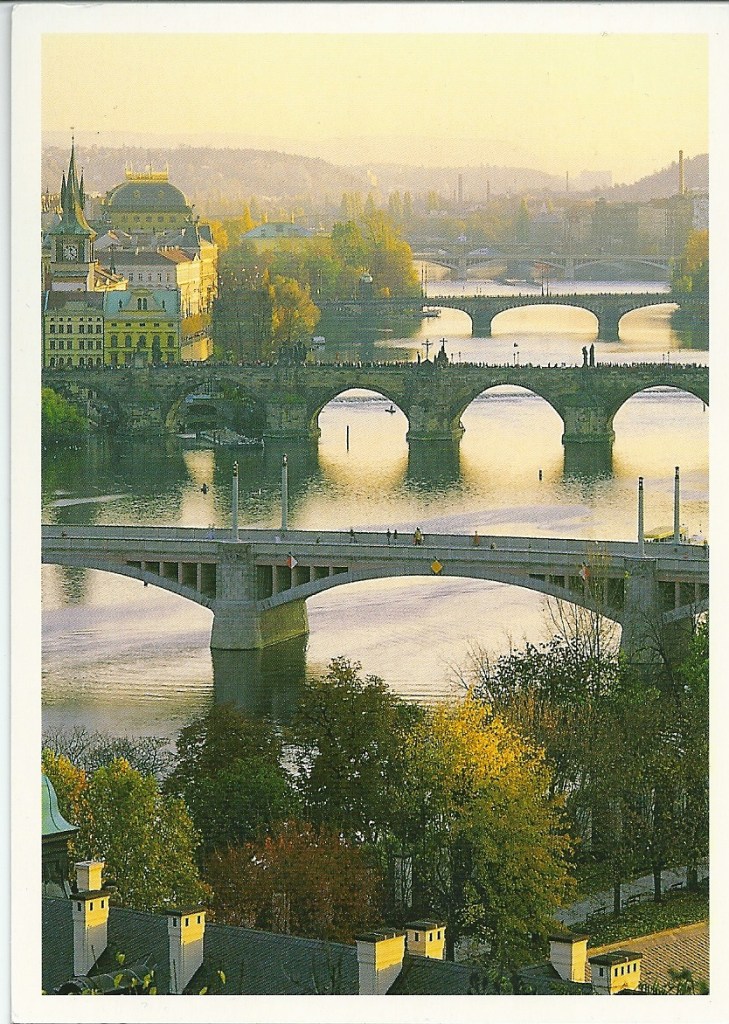
The Charles Bridge is a famous historic bridge that crosses the Vltava river in Prague, Czech Republic. Its construction started in 1357 under the auspices of King Charles IV, and finished in the beginning of the 15th century. The bridge replaced the old bridge that had been badly damaged by a flood in 1342. This new bridge was originally called the Stone Bridgeor the Prague Bridge but has been the “Charles Bridge” since 1870. As the only means of crossing the river Vltava (Moldau) until 1841, the Charles Bridge was the most important connection between Prague Castle and the city’s Old Town and adjacent areas.
Received from myself on 22.09.2013
History:
The bridge is 621 m long and nearly 10 m wide, resting on 16 arches shielded by ice guards. It is protected by three bridge towers, two of them on the Lesser Town side and the third one on the Old Town side. The Old Town bridge tower is often considered to be one of the most astonishing civil gothic-style buildings in the world. The bridge is decorated by a continuous alley of 30 statues and statuaries, most of them baroque-style, originally erected around 1700 but now all replaced by replicas.
Trivia:
Until 1841 the Charles bridge was the only bridge over the Moldau river.
Received from myself on 22.09.2013
History:
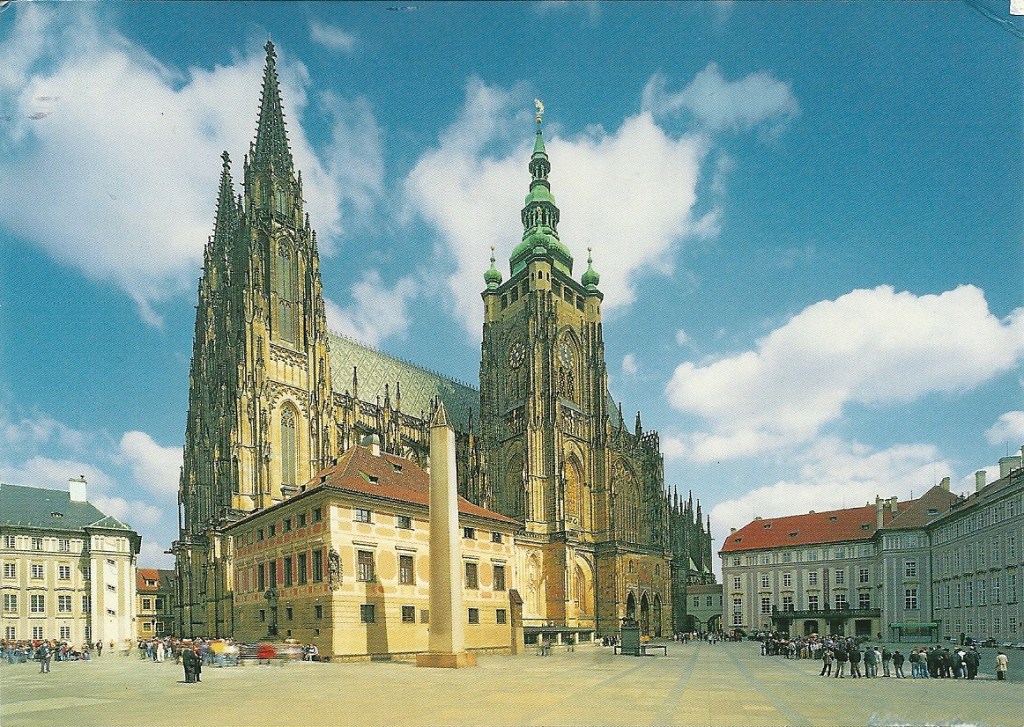
The history of the castle goes back to 870 when the first convent in Bohemia was founded in the castle. A Romanesque palace was erected here during the 12th century and in the 14th century it was rebuilt in Gothic style. A large fire in 1541 destroyed large parts of the castle.
Trivia:
The Prague Castle is listed in the Guiness Book of Records as the largest castle in the world, with about 570 meters in length and 130 meters wide.
Received from myself on 22.09.2013
History:
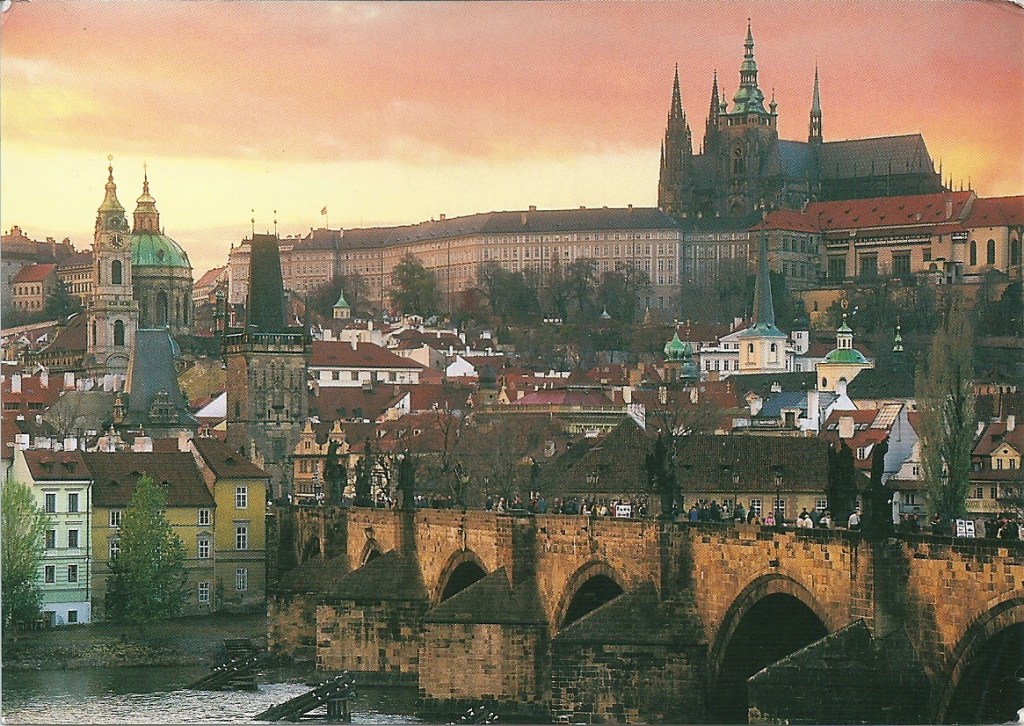
The castle was rebuilt in the second half of the 18th century and in 1918 became the residence of the president. After the liberation of Czechoslovakia and the coup in 1948, the Castle housed the offices of the communist Czechoslovak government. After Czechoslovakia split into the Czech Republic and Slovakia, the castle became the seat of the Head of State of the new Czech Republic.
Trivia:
The Bohemian Crown Jewels are kept in this castle. .
Received from myself on 22.09.2013
History:
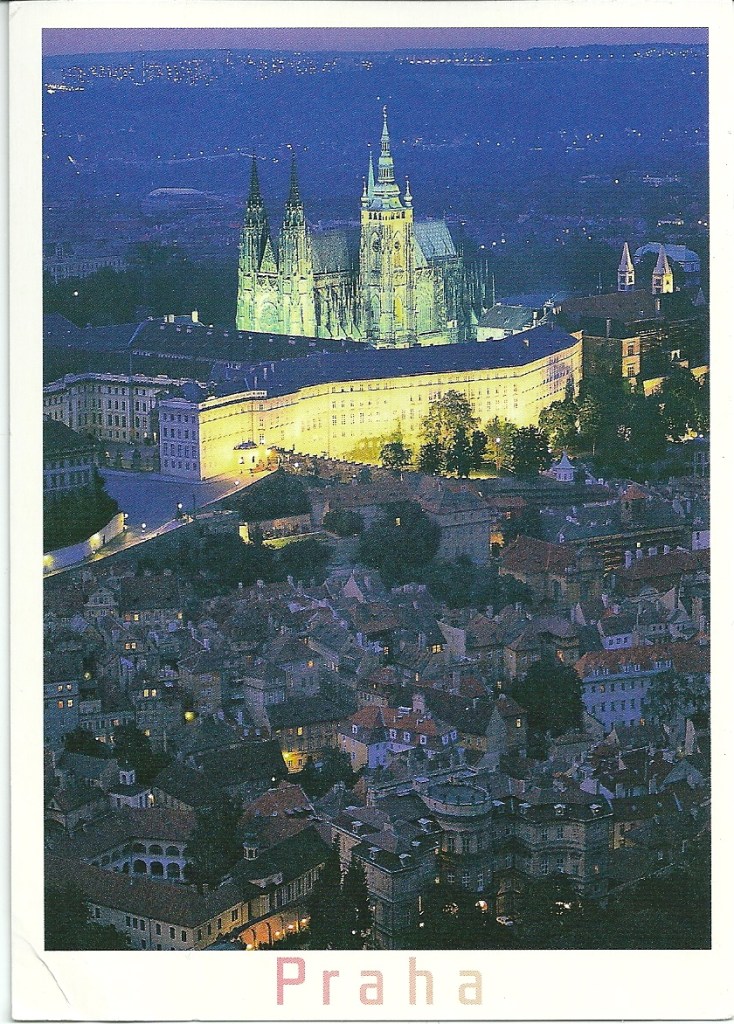
Malá Strana (literally Little Side), or Lesser Town is a district in Prague. In the Middle Ages it was a dominant center of ethnic German citizens of Prague. It also housed a large number of noble palaces.
It was founded in 1257 by King Ottokar II of Bohemia and as a royal town had several privileges.
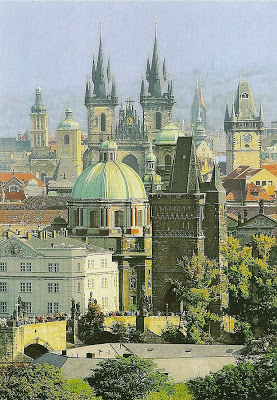
Received from myself on 22.09.2013
History:
The old town (or Staré Mesto) is a medieval settlement, separated from the outside by a wall and semi-circular moat. The moat is now covered by streets. Soon after the city was expanded in the 14th century the moat and wall were dismantled.
From its early existance around the 9th century, Staré Mesto was laid out of settlements which appeared around a marketplace on the bank of the river. Records dating back to 1100 AD indicate that every Saturday a market was held there.
 Unesco Postcards